
Taking Biotin But Still Losing Hair? 5 Likely Reasons Why
The problem wasn’t the dose. It was what biotin was designed to do.

Introduction
The Problem Wasn’t Your Patience
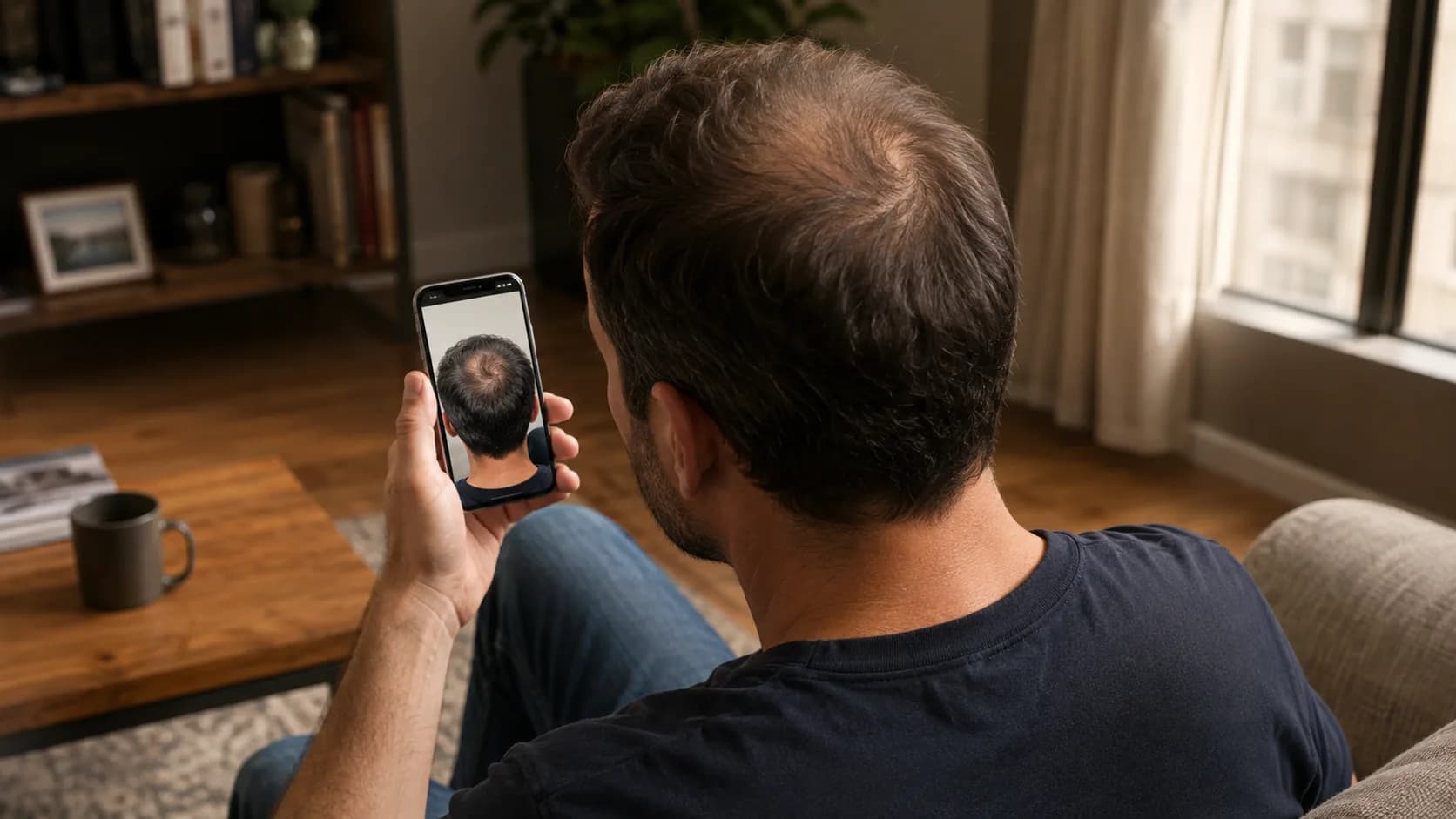
It starts with one small moment. A shorter haircut. A photo someone else took. More scalp showing through at the crown. A hairline that looks farther back than it did last year.
So you do the sensible thing. You buy the supplement everyone associates with hair loss and start taking it.
Then weeks become months. The bottle gets lighter. Your hair keeps thinning.
You assume you need a higher dose, more time or a different brand. But that all assumes biotin was the answer to the problem in the first place.
Biotin makes sense when thinning comes from a true biotin deficiency. Male-pattern hair loss is a different problem with a different cause.1
That changes the question. Instead of asking whether you took enough biotin, ask whether it has been studied for the kind of hair loss you actually have.
The answer starts with what biotin actually does.
The Key Distinction
Biotin Has a Different Job
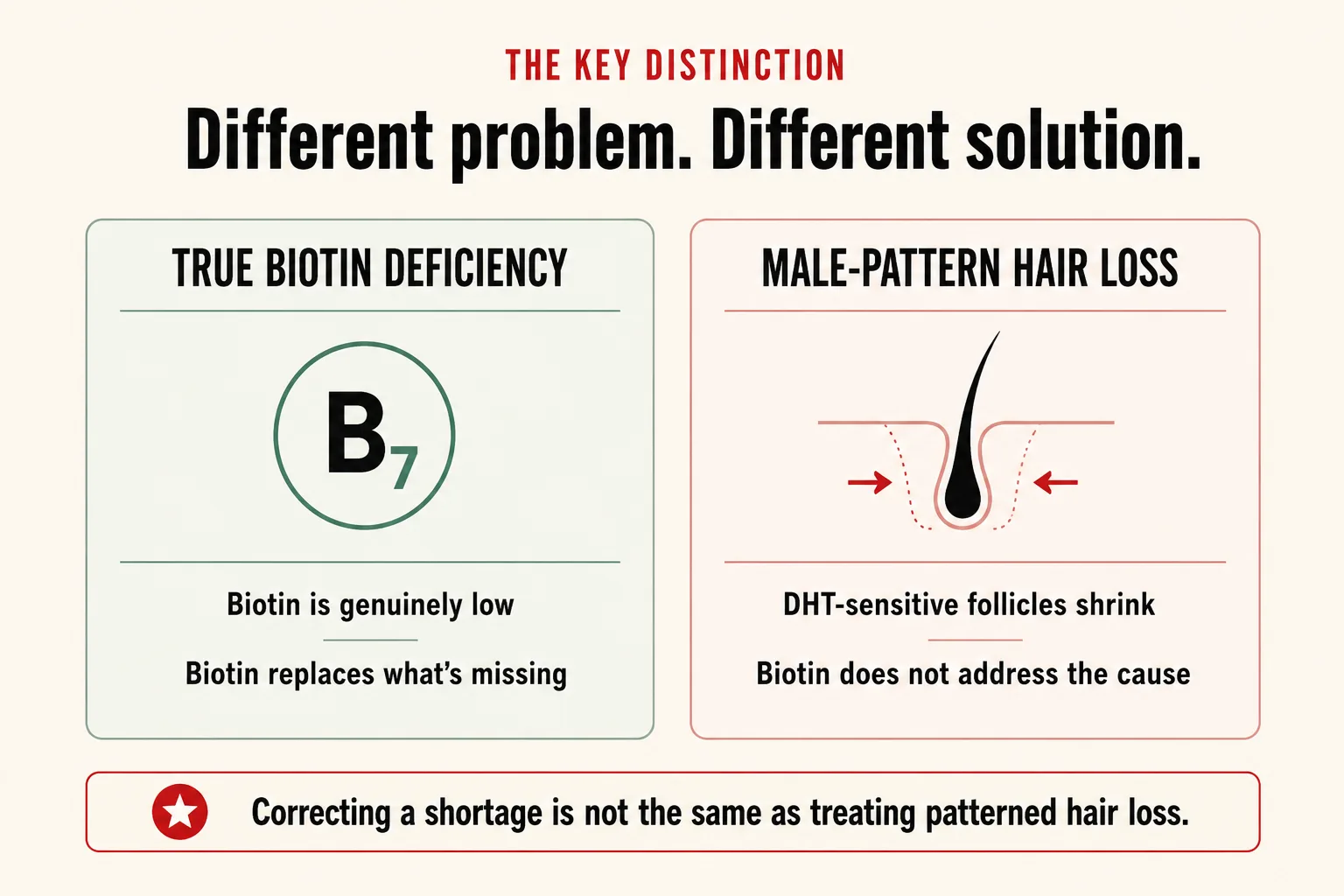
Biotin is a B vitamin that helps your body process nutrients. If you’re truly deficient, replacing it matters. But that doesn’t make it a treatment for male-pattern hair loss.6
Researchers deprived human hair-follicle cells of biotin to see what would happen. Their growth and keratin production didn’t change. It was a laboratory study, not a trial in men, but it challenges the assumption that more biotin automatically means more hair.5
That’s the distinction to remember: correcting a true vitamin shortage is one thing. Treating patterned hair loss is another.
And the first reason that matters is how rarely a true biotin shortage occurs.
Reason 1
The Deficiency Biotin Fixes Is Rare
Biotin supplements have a clear purpose: replacing biotin when your body isn’t getting enough.
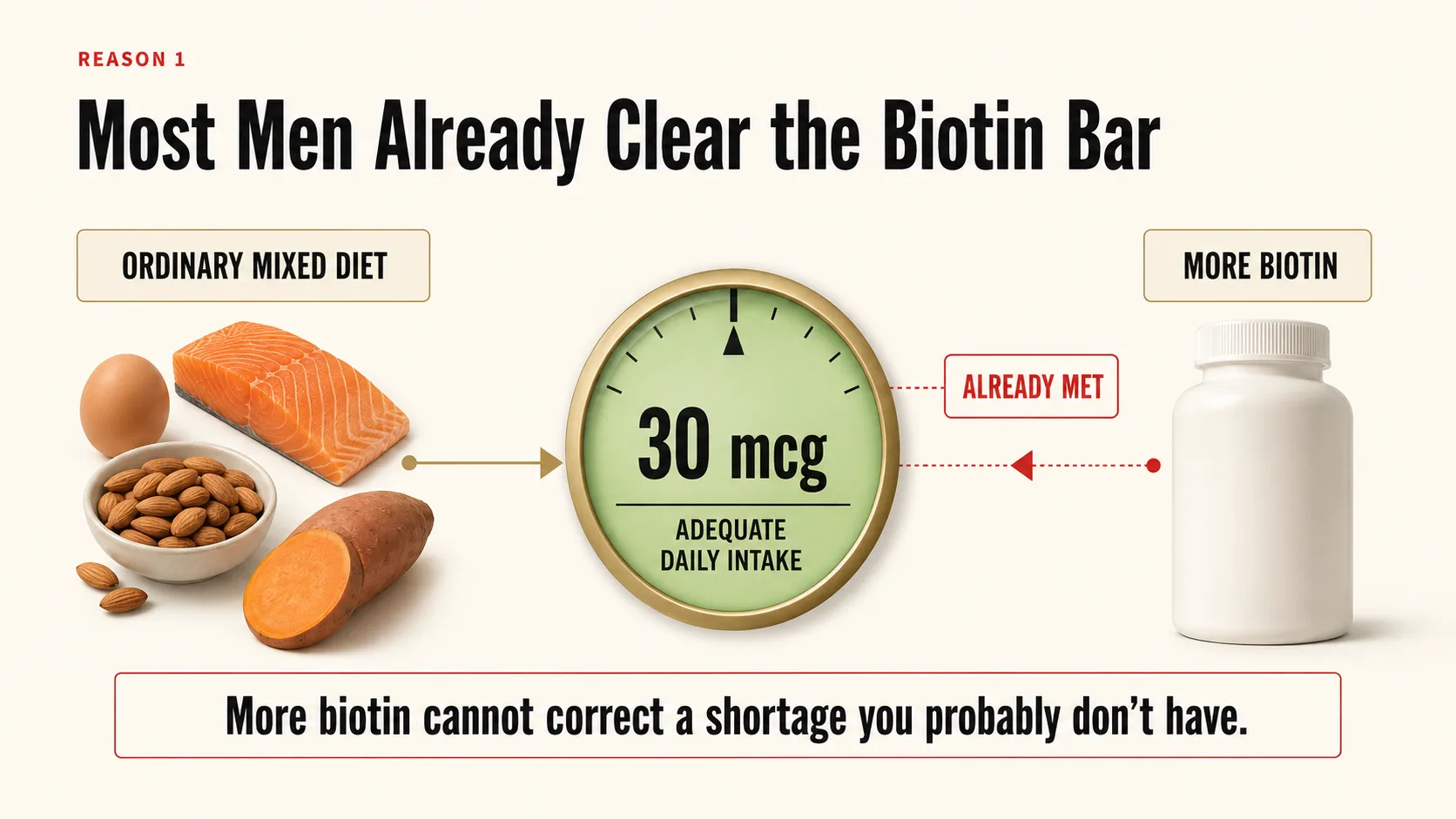
For most healthy men, that shortage isn’t the problem. The National Institutes of Health sets adequate intake at 30 micrograms a day, an amount comfortably covered by an ordinary mixed diet. It also says severe deficiency has never been reported in otherwise healthy people eating a normal mixed diet.1
Real deficiency can happen. Certain anticonvulsant medications, the rare inherited disorder biotinidase deficiency and chronic heavy alcohol use can raise the risk. If one of those applies to you, talk to your doctor.1
Otherwise, taking more biotin means trying to correct a shortage you probably don’t have. That’s why the bottle can get emptier while your hair keeps thinning.
And hair loss from a true biotin deficiency usually leaves very different clues.
Reason 2
Your Hair-Loss Pattern Is a Clue
Where your hair is thinning matters.
When biotin deficiency causes hair loss, the clinical picture is usually broader than a receding hairline or thinning crown. The National Institutes of Health describes thinning that can progress to hair loss across the body, often alongside a scaly red rash around the eyes, nose and mouth.1
Now compare that with a hairline moving back at the temples or a patch at the crown becoming harder to cover. Both involve hair loss, but they create very different pictures.
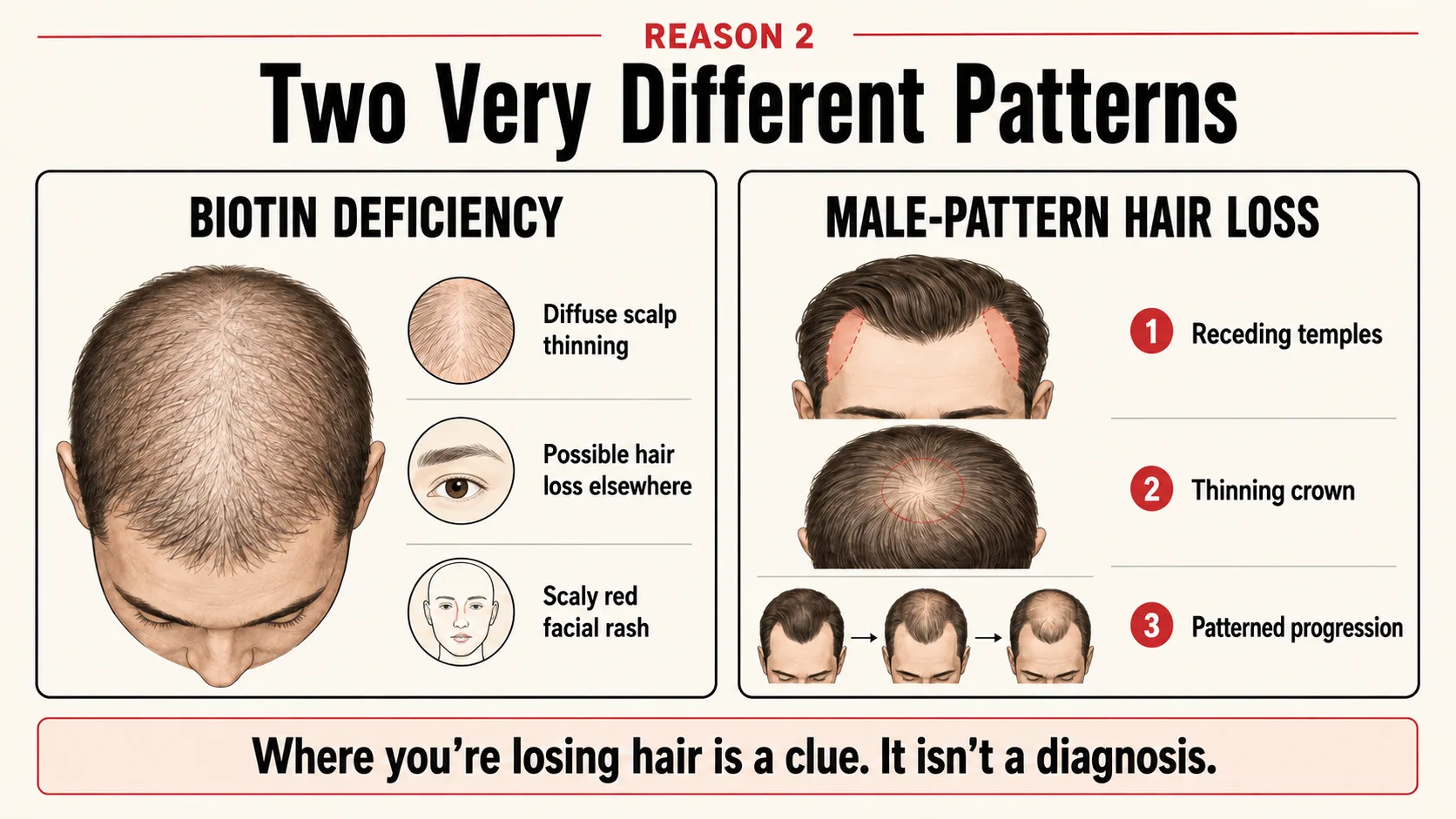
Only a doctor examining your scalp can tell you exactly what’s happening. But if your hair loss follows the familiar male pattern, taking more biotin means focusing on the less likely explanation.
The next question isn’t how much biotin to take. It’s whether biotin has ever been shown to treat male-pattern hair loss.
Reason 3
There’s No Proven Timeline
If you kept taking biotin because you thought it simply needed more time, here’s the problem: our search of the medical literature found no randomized trial of biotin for male-pattern hair loss.2346
The available studies examine other hair concerns or specific patient groups. None establishes that biotin treats the familiar male pattern of a receding hairline or thinning crown.3
That doesn’t mean biotin was tested for male-pattern hair loss and failed. It means no randomized trial has established that it works, how much to take or how long to wait.
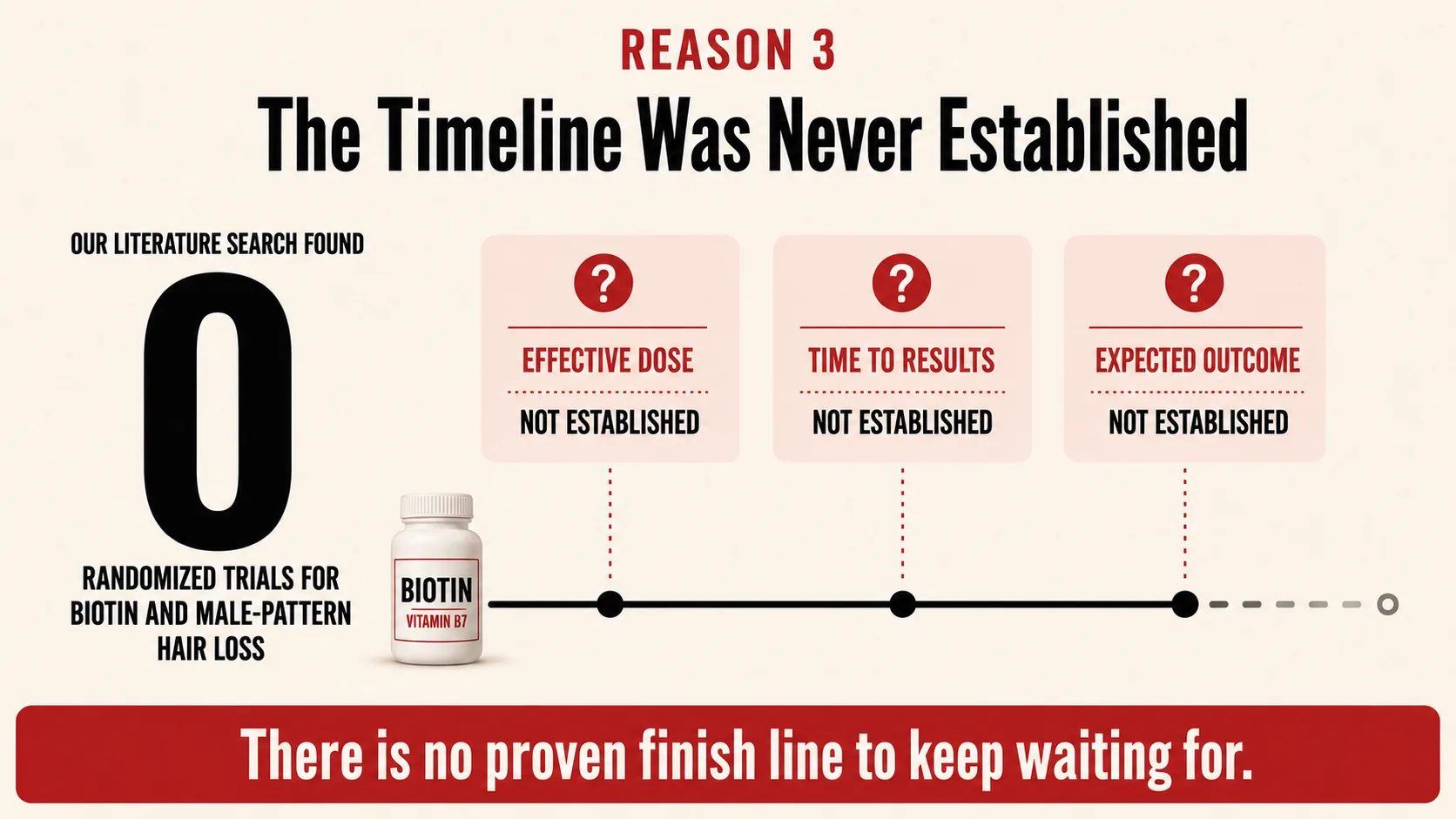
Three reviews reached the same practical conclusion: the evidence doesn’t support routine biotin supplementation for hair in people who aren’t deficient.234
So if you’re waiting for biotin to suddenly start working, there’s no proven timeline you’re trying to reach.
That leaves the next possibility: maybe you simply need more.
Stop Guessing and Find Out What Fits
Complete the Keeps consultation and get a treatment recommendation from a licensed provider.
Reason 4
A Bigger Dose Isn’t Better Proof
When your daily biotin isn’t working, the next thought is obvious: maybe it isn’t strong enough.
So you start looking for a higher-potency formula with a bigger number on the label. But those numbers are all over the map.
Among two online hair products we reviewed:
That’s a 500-fold difference. For context, the adequate daily intake for an adult is 30 micrograms.1
But 5,000 micrograms isn’t evidence of 500 times more hair. It’s simply 500 times more biotin.
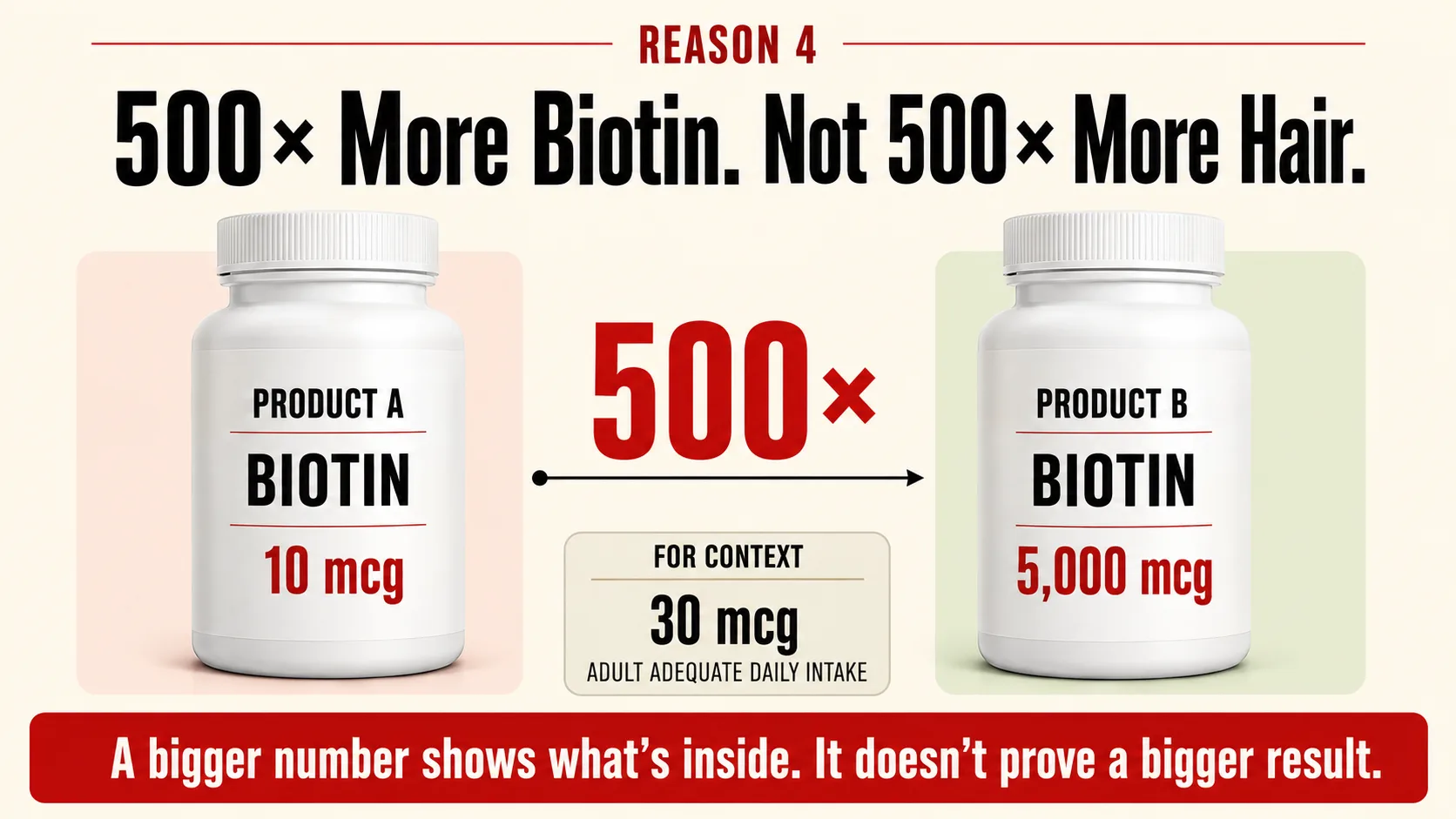
No randomized trial has established an effective biotin dose for male-pattern hair loss. Without that target, a bigger number creates the appearance of strength without proving a stronger result.2346
Publishing the exact dose still matters because it lets you compare products. But disclosure only tells you what’s inside. Clinical evidence tells you whether that number should matter to you.
That leaves one powerful objection: What about the men who swear biotin worked?
Reason 5
What the Success Stories Don’t Tell You
You don’t have to search long to find someone online claiming biotin saved his hair. But before you let that story outweigh the clinical evidence, ask what the post doesn’t tell you.
Was his hair loss ever diagnosed? Was he actually biotin-deficient? What else was he taking? Did he start minoxidil or finasteride at the same time? Is he selling the supplement or earning a commission from the link? Is the person behind the post even real?
Without those answers, the story doesn’t show that biotin caused anything. It only shows that someone made the claim.
The published evidence gives us something more concrete. One systematic review gathered 18 case reports in which someone’s hair improved after taking biotin. In all 18 cases, the person had an underlying medical condition.2
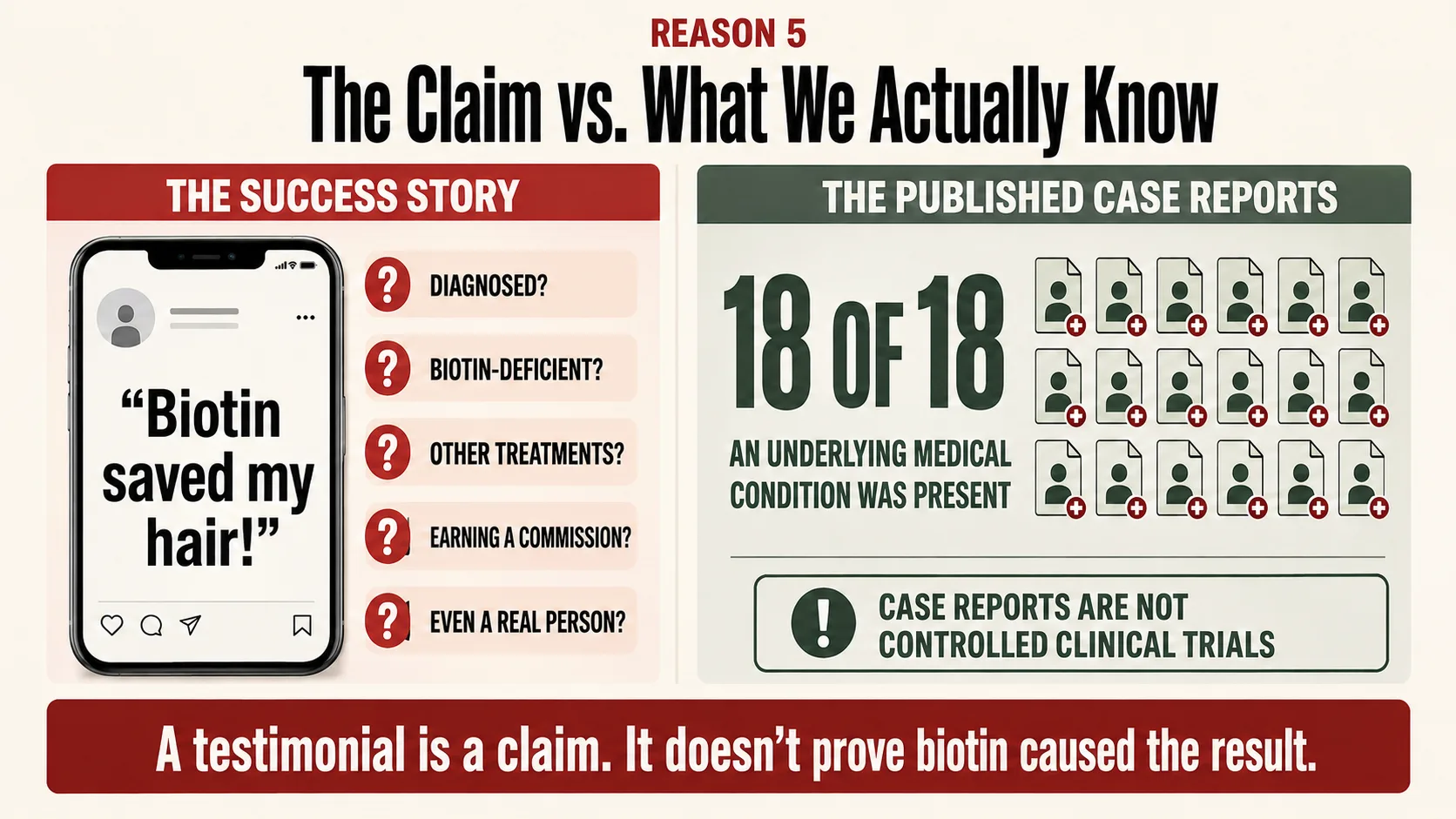
Case reports aren’t controlled clinical trials. But the pattern still matters: the published successes involved a separate medical issue. They don’t establish that biotin treats male-pattern hair loss in otherwise healthy men.
Testimonials can give you hope. They can’t tell you what’s causing your hair loss or what will treat it.
After five reasons, the better question is no longer whether you need stronger biotin. It’s what your next option should be able to prove.
The Solution Standard
Four Things Your Next Treatment Should Prove
You don’t need another product that simply contains an ingredient associated with hair. You need an option built around the kind of hair loss you’re actually experiencing.
Before spending another dollar, require four things:
- Studied for male-pattern hair loss: Not “hair health,” stronger-looking hair or a completely different type of shedding. The evidence should match the problem.
- Published results you can verify: Look for a named study, who participated, what was measured and how long it took. A percentage without those details is just a marketing number.
- Clear ingredients and doses: You should know exactly what you’re taking and how much. Otherwise, you can’t compare your options or make an informed decision.
- The full picture before you start: Side effects, limitations, ongoing commitment and cancellation terms should be clear before you pay, not discovered after treatment begins.
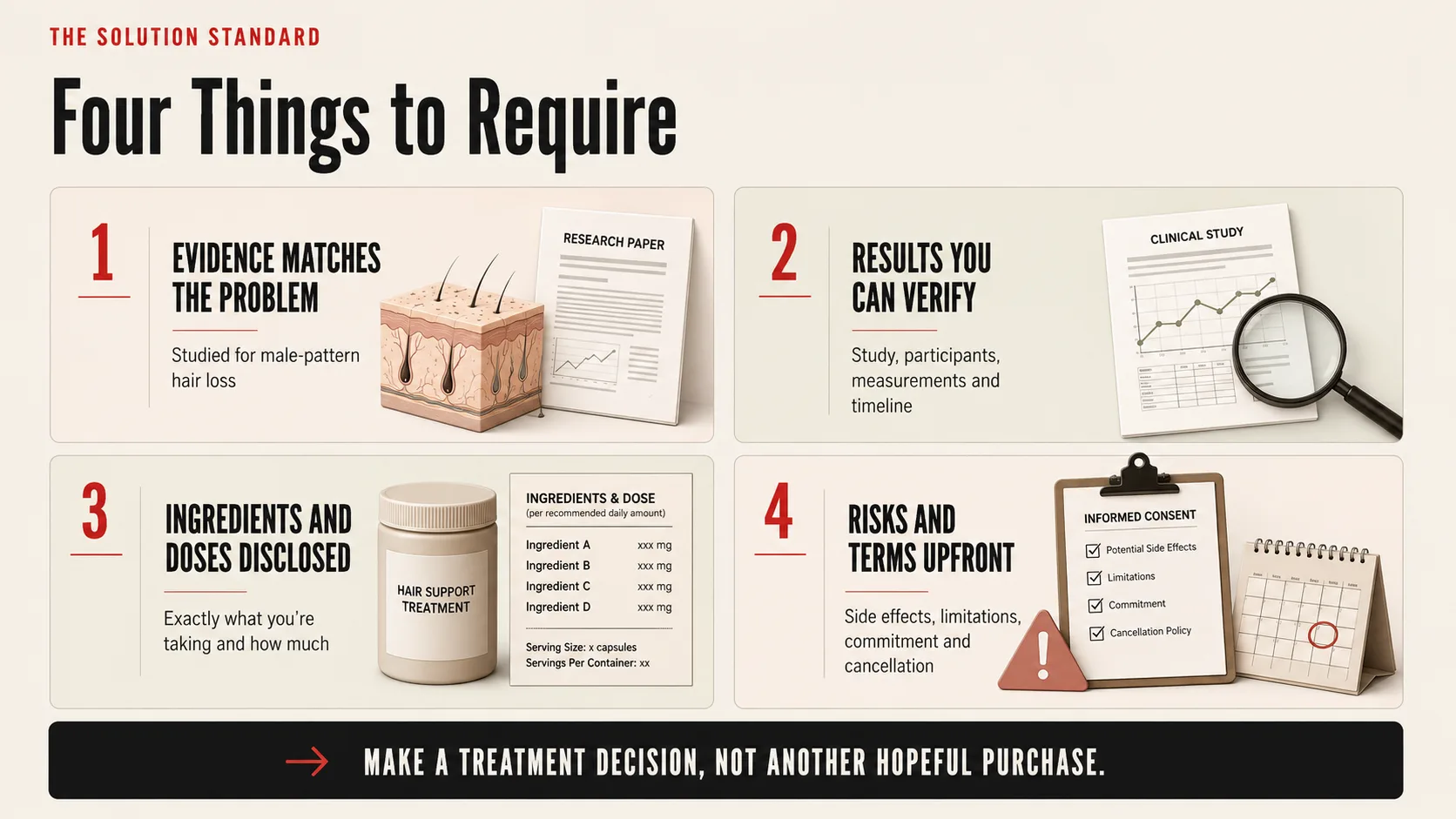
Together, those four requirements separate a treatment decision from another hopeful purchase.
For transparency, Keeps sponsored this article, but it STILL has to meet the same standard.
The Verdict
Keeps Starts With Evidence
Biotin asks you to assume you have a vitamin shortage. Keeps takes a different approach.
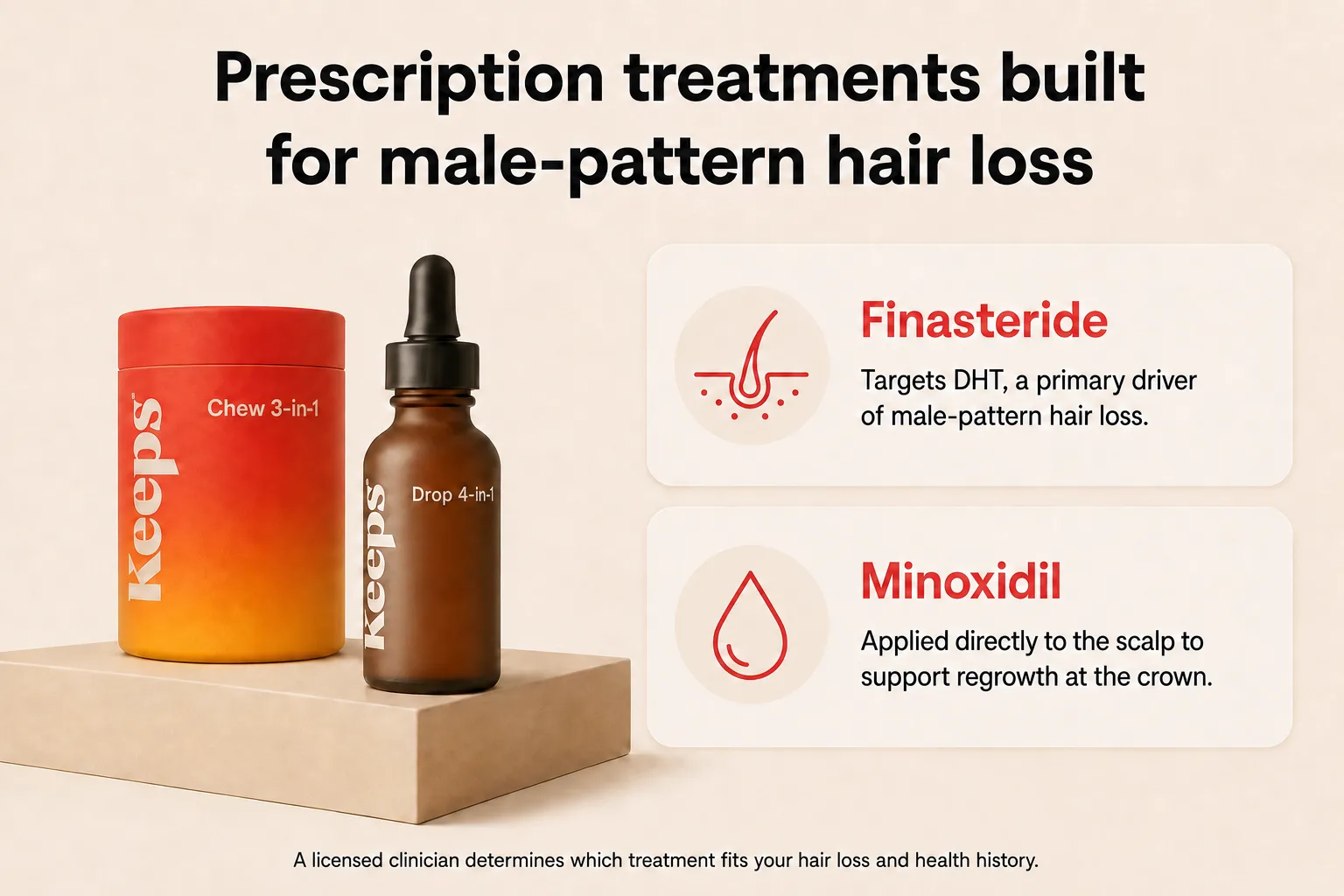
Keeps gives men online access to oral finasteride 1 mg, topical minoxidil 5% and clinician-prescribed combination formulas. Instead of choosing another product on your own, you can get a treatment plan matched to your hair loss. Keeps offers oral and topical prescription options, with a licensed clinician determining which formulation fits your hair loss and health history.7812
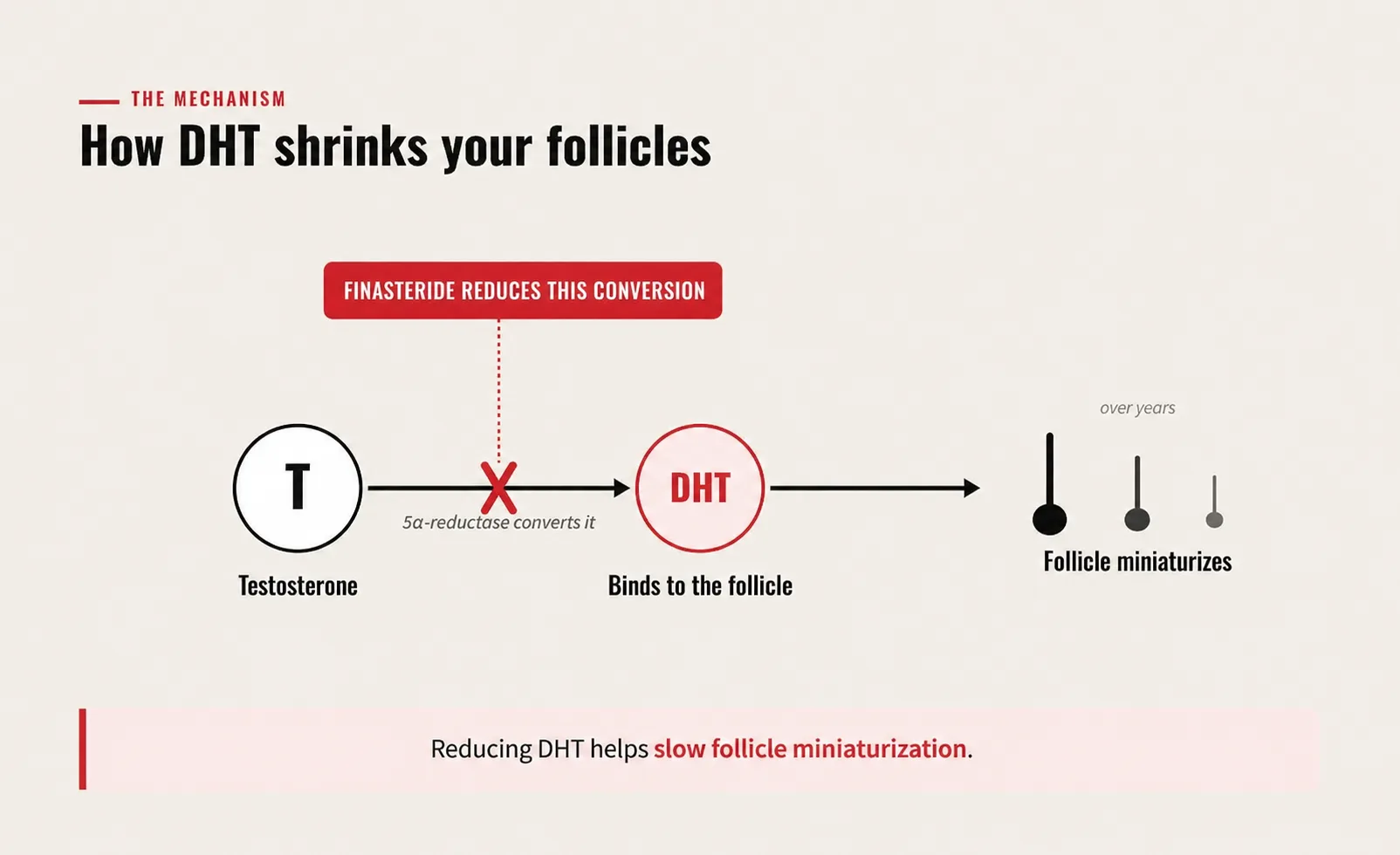
These aren’t general “hair health” ingredients. Finasteride targets the hormonal pathway involved in pattern hair loss. Minoxidil is applied directly to the scalp to support regrowth at the crown. Both have been studied in men with the condition you’re trying to address.78
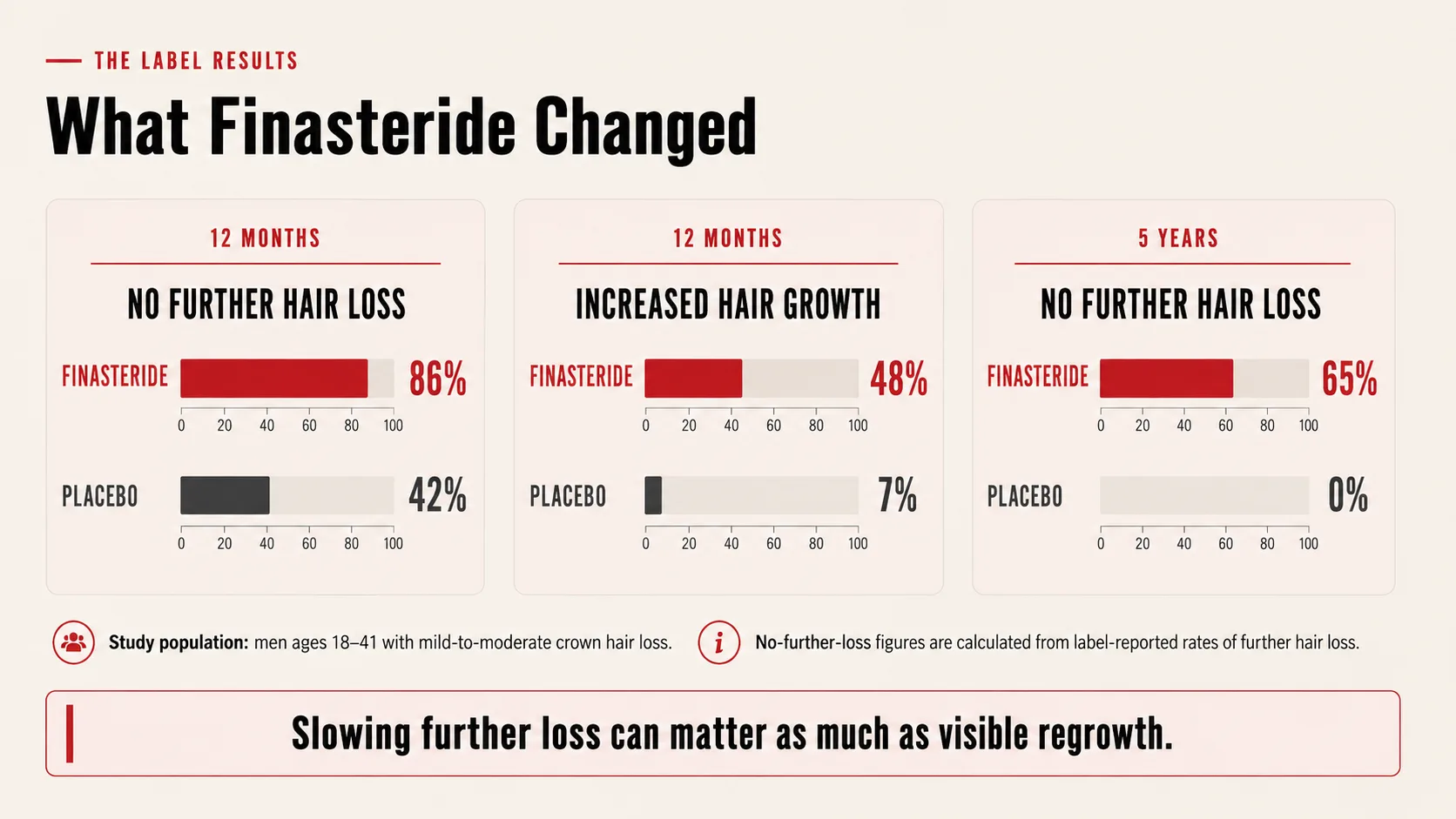
The finasteride label shows what that difference can mean:
- After 12 months, 86% of men taking finasteride showed no further hair loss by hair count, compared with 42% taking a placebo.
- After five years, 65% showed no further hair loss, compared with none of the men taking a placebo.
- A blinded photographic review found increased hair growth in 48% of men after 12 months, compared with 7% taking a placebo.7
The first two percentages are calculated from the label’s reported rates of men who experienced further hair loss.
Those results came from men ages 18 to 41 with mild-to-moderate hair loss at the crown. They show why slowing further loss can be just as important as waiting for visible regrowth.7
Keeps makes both treatments accessible without an in-person appointment. You complete an online consultation, a licensed provider reviews your hair loss and health, and treatment ships to your door if prescribed.12
That’s the meaningful step beyond biotin: treatment studied for male-pattern hair loss, measurable results you can verify and access without the waiting room.
Why Men Switch to Keeps
| Keeps14 | Others |
|---|---|
| Clinician-matched formulation | Generic, one-size protocols |
| Finasteride or dutasteride access | Limited or no DHT-blocking options |
| Up to 7 active ingredients | Fewer active ingredient options |
| Targets DHT, regrowth and thickness | Targets a single pathway |
| Dosing tailored to your stage | Fixed dosing for everyone |
HealthGeek’s Recommendation
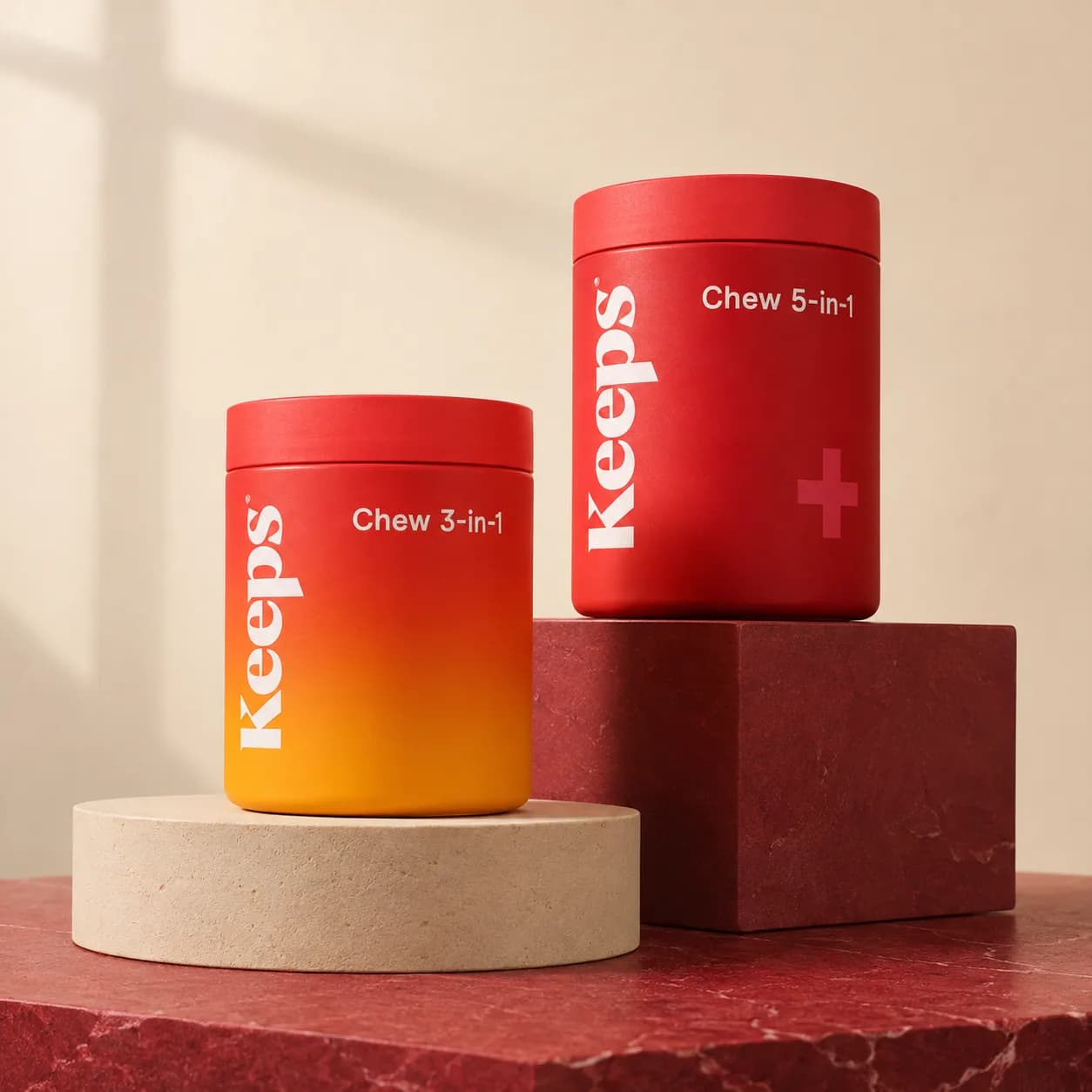
Keeps Hair Loss Treatment
Keeps offers online access to oral finasteride 1 mg and topical minoxidil 5%, two treatments studied for male-pattern hair loss.7812 A licensed provider reviews your hair loss and health, then determines which treatment, if any, fits.12 If prescribed, it ships directly to your door in a three-month supply.1213 It’s our recommended next step for men whose hair kept thinning after biotin.
Frequently Asked Questions
Should I stop taking biotin?
If a clinician recommended biotin or you may be deficient, ask them before stopping. For male-pattern hair loss, our search found no randomized trial supporting it. Include every supplement you take in your Keeps intake.236
Will treatment work on a receding hairline?
The strongest label evidence is for thinning at the crown. Minoxidil isn’t intended for frontal baldness or a receding hairline, and finasteride’s effectiveness at the temples hasn’t been established. Tell the provider exactly where your hair is thinning.78
What side effects should I know about?
In first-year finasteride trials, decreased libido was reported by 1.8% of men versus 1.3% taking a placebo, erectile dysfunction by 1.3% versus 0.7%, and ejaculation disorder by 1.2% versus 0.7%. The label also includes post-marketing reports of depression, suicidal ideation or behavior and sexual dysfunction continuing after treatment stopped. Those reports don’t establish frequency or causation. Discuss your history and concerns with the provider.7
How long does treatment take, and do I have to keep using it?
Minoxidil results can appear after two months but may take at least four, with temporary shedding possible for up to two weeks. Maintaining results requires continued treatment. Finasteride’s effect reverses within 12 months after stopping, while minoxidil regrowth is typically lost within three to four months.78
How much does Keeps cost, and can I cancel?
Prices vary by treatment and delivery frequency. Keeps currently offers three-, six- and twelve-month options depending on the treatment. Its plan page displays standard and promotional prices, so confirm both your initial and refill costs before ordering.13
Shipping costs $5 per shipment. The first year’s medical consultation is included in the treatment price, with annual consultations costing $5 after that. Keeps says treatment purchases are final.13
You can cancel through your account. If your next refill is less than 24 hours away, Keeps instructs you to call so the cancellation can be processed before the order.13
How is Keeps different from seeing a dermatologist?
Keeps provides online access to a licensed provider who reviews your intake and decides whether to prescribe. A dermatologist can physically examine your scalp and investigate other causes. If your diagnosis is uncertain or you want an in-person examination, see a dermatologist first.12
What if I’m offered a compounded combination formula?
Ask for every active ingredient, its dose and why it’s being recommended.
The Keeps Drop+ 11-In-1 page names dutasteride, minoxidil and nine supporting ingredients, but it doesn’t publish their doses. Keeps also states that the compounded medication is not FDA-approved.12
Dutasteride is FDA-approved for an enlarged prostate, not hair loss. That doesn’t prevent a licensed provider from prescribing it off-label, but you should understand exactly what you’re receiving before agreeing to treatment.9
Sources
- National Institutes of Health, Office of Dietary Supplements. “Biotin: Fact Sheet for Health Professionals.” Accessed August 27, 2026. Supports Reason 1 (30 micrograms per day adequate intake, typical dietary intake, rarity of deficiency, anticonvulsant use, biotinidase deficiency and chronic alcohol exposure) and Reason 2 (hair loss and accompanying rash associated with deficiency).
- Patel DP, Swink SM, Castelo-Soccio L. “A Review of the Use of Biotin for Hair Loss.” Skin Appendage Disorders. 2017;3(3):166-169. PMID 28879195. Accessed August 27, 2026. Supports Reason 3 (limited evidence for biotin supplementation) and Reason 5 (all 18 published cases involved an underlying medical condition associated with poor hair or nail growth).
- Yelich A, Jenkins H, Holt S, Miller R. “Biotin for Hair Loss: Teasing Out the Evidence.” Journal of Clinical and Aesthetic Dermatology. 2024;17(8):56-61. PMID 39148962. Accessed August 27, 2026. Supports Reason 3 (lack of high-quality evidence supporting biotin as a general hair supplement and the limitations of the available studies).
- Moltó-Balado P, et al. “Effectiveness of Biotin Supplementation for Hair Growth in Patients with Alopecia: A Systematic Review.” Dermato. 2026;6(2):17. Accessed August 27, 2026. Provides supplemental support for Reason 3 (available human evidence is insufficient to support routine biotin supplementation for alopecia-related hair loss).
- Limat A, Suormala T, Hunziker T, et al. “Proliferation and Differentiation of Cultured Human Follicular Keratinocytes Are Not Influenced by Biotin.” Archives of Dermatological Research. 1996;288:31-38. Accessed August 27, 2026. Supports The Key Distinction (extremely low and pharmacological biotin concentrations did not affect cellular proliferation or expression of the tested keratins). This was a laboratory cell-culture study, not a clinical trial in men.
- Soleymani T, Lo Sicco K, Shapiro J. “The Infatuation With Biotin Supplementation: Is There Truth Behind Its Rising Popularity?” Journal of Drugs in Dermatology. 2017;16(5):496-500. PMID 28628687. Accessed August 27, 2026. Supports The Key Distinction (biotin’s role as a cofactor in nutrient metabolism) and Reason 3 (the review found no clinical trial of biotin for alopecia and no randomized controlled trial evaluating its effect on human hair quantity or quality).
- DailyMed. “Finasteride Tablets, USP 1 mg: Full Prescribing Information.” Accessed August 27, 2026. Supports this page’s finasteride claims (approved indication and 1 mg dose; clinical-study population; hair-count and photographic results; 5-alpha-reductase inhibition; bitemporal limitation; time to benefit; reversal after stopping; sexual adverse-event rates; and post-marketing reports including persistent sexual dysfunction, depression and suicidal ideation or behavior).
- DailyMed. “Keeps Minoxidil Topical Solution USP, 5%: Drug Facts.” Accessed August 27, 2026. Supports this page’s minoxidil claims (5% strength; vertex-only indication; frontal-baldness and receding-hairline limitation; two-to-four-month timeline; temporary shedding; continued-use requirement; and the warning that results vary).
- DailyMed. “AVODART (Dutasteride) Capsules: Full Prescribing Information.” Accessed August 27, 2026. Supports the compounded-treatment FAQ (dutasteride is approved for symptomatic benign prostatic hyperplasia, not hair loss).
- Keeps. “Daily Hair Defense Supplement.” Accessed August 27, 2026. Provider statement. Supports Reason 4 (the product currently states that it contains 0.01 mg, or 10 micrograms, of biotin).
- Nature’s Bounty. “Biotin 5,000 mcg.” Accessed August 27, 2026. Manufacturer statement. Supports Reason 4 (an officially marketed hair, skin and nails supplement containing 5,000 micrograms of biotin per serving).
- Keeps. Product and treatment pages: Our Products · Finasteride 1 mg · Minoxidil Solution · Drop+ 11-In-1. Accessed August 27, 2026. Provider statements. Support this page’s claims about the Keeps service (access to oral finasteride 1 mg and topical minoxidil 5%; clinician-prescribed combination formulas; online provider review; direct delivery; product-dependent delivery frequencies; and the Drop+ page’s naming of dutasteride, minoxidil and nine supporting ingredients without publishing their doses). The Drop+ page states that the compounded medication is not FDA-approved.
- Keeps. Current plan and service pages: Plan Selection · Shipping Cost · Medical Provider Consultation Cost · Refund and Return Policy · Cancellation Policy · Shipment Frequency · State Availability. Accessed August 27, 2026. Provider statements. Support Our Recommendation and the FAQ (current treatment and frequency options; $5 shipping per shipment; first-year consultation cost included in treatment and $5 annual consultations thereafter; final-sale treatment policy; account-based cancellation and the 24-hour refill cutoff; three-month refill timing; and availability in most of the United States).
- Keeps. “Hair Treatment” landing page. Accessed August 28, 2026. Provider statement. Supports the Keeps-versus-others comparison (clinician-matched formulation; finasteride and dutasteride access; up to seven active ingredients; the stated targeting of DHT, regrowth and thickness; and dosing described as tailored to the stage of hair loss). The second column of that comparison is the provider’s own characterisation of unnamed alternatives, not an independent HealthGeek finding; no competitor is named and nothing is scored.